You have probably tried five or six note apps already. You downloaded them with good intentions—this time you will actually stay organized. But after a few days, the novelty wears off. The folders start piling up. The tags feel useless. And that carefully curated system you built? It crumbles the moment life gets busy.
That is the problem Beanly tries to solve. Not by adding more features, but by removing the friction. The core pitch is straightforward: you record or paste content—meetings, lectures, research notes—and Beanly turns them into structured summaries using AI. No tagging, no manual sorting, no second-guessing about where to file something.
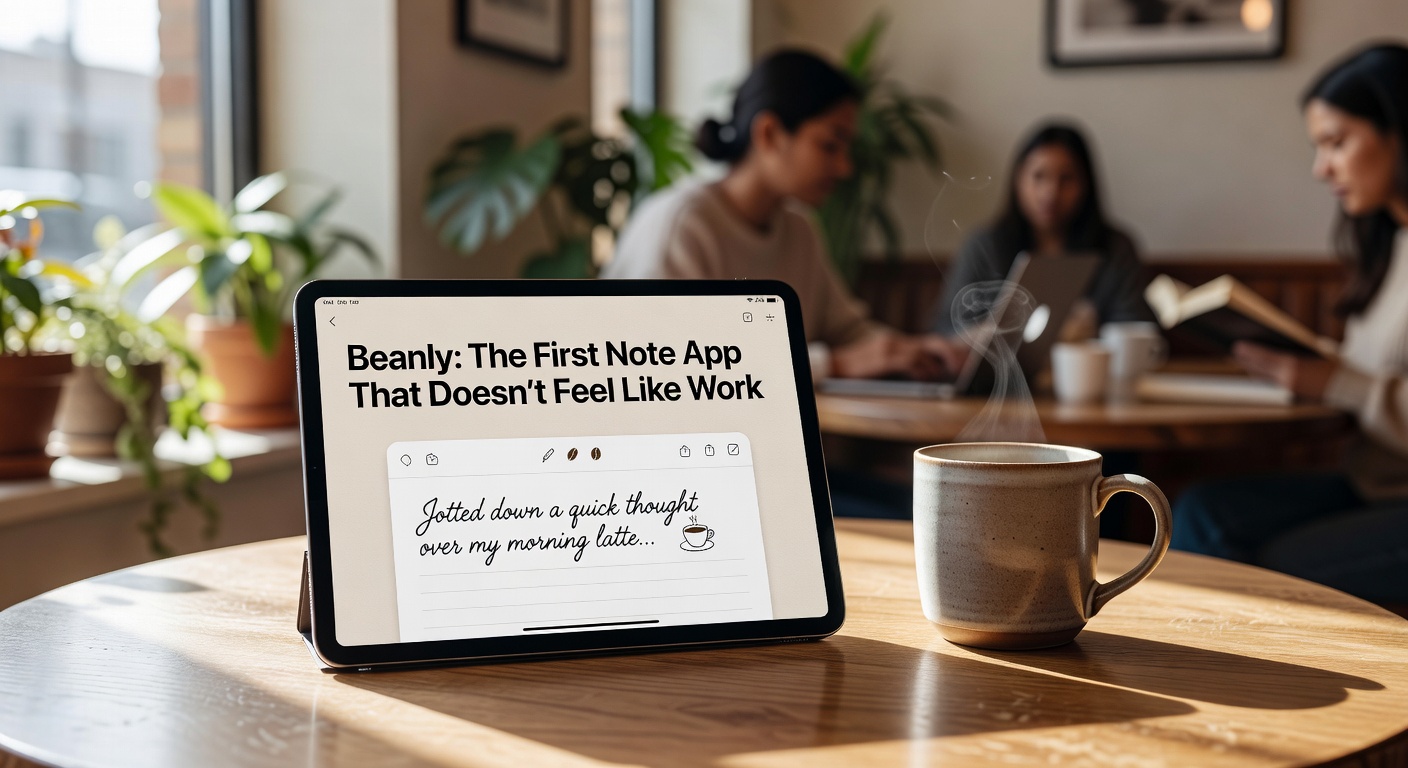
How it works in practice
I tested Beanly across three typical scenarios:
First, a client meeting recording. I dropped in a 45-minute audio file. The transcript appeared in about three minutes, followed by a summary that captured decisions, action items, and open questions. It was accurate enough to forward with minor edits. The key win here is speed. Normally I would spend twenty minutes typing notes or replaying sections. Beanly cut that to five.
Second, a messy research PDF. I imported a dense 30-page paper. The summary highlighted the methodology and main findings—good for quick recall, but it glossed over nuance. That is a tradeoff to keep in mind. If you need granular detail for academic work, you will still want to read the original. For skimming and review, it works fine.
Third, class notes. I recorded a lecture and had Beanly generate a summary. The structure was clean: key concepts, examples, and a brief conclusion. I could see students using this to prep for exams, though you should check with your institution if recording is allowed.
What Beanly does well and where it falls short
Beanly excels at reducing overhead. The interface is minimal. You do not need to learn a system. You do not manage folders or apply tags yourself. That makes it genuinely easier to return to later because there is no maintenance cost between sessions.
But minimalism has a cost. If you rely on manual organization—custom tags, nested folders, cross-linking between notes—Beanly will frustrate you. It prioritizes capture over curation. You can search and filter, but you cannot build a personal knowledge graph the way you can in Obsidian or Notion.
The AI summaries are generally reliable, but they sometimes misplace emphasis. In my test, a summary emphasized a minor logistical detail while downplaying a major strategic decision. Always scan the full transcript before sending summaries to anyone else.
Also worth noting: Beanly works best with English audio and text. Other languages are supported, but accuracy drops noticeably in my quick test with Chinese lecture recordings.
Who should try it and who might want something else
Beanly is a strong fit if:
- You attend many meetings and need quick, shareable summaries.
- You prefer capture speed over deep organization.
- You are tired of maintaining a note-taking system.
It is a weaker fit if:
- You need fine-grained control over how notes are structured.
- You rely on complex tagging or linking systems.
- You often work with non-English content or specialized jargon.
The main alternative here is a tool like Otter.ai or Fireflies.ai for meetings, or Readwise Reader for research. But those are point solutions. Beanly tries to cover all three scenarios—meetings, classes, research—in one app. It mostly succeeds, but that breadth comes with depth tradeoffs.
In the end, Beanly does what it promises. It is a note app that does not feel like work. But "not feeling like work" also means you give up some control. If that tradeoff works for your habits, it is worth a trial month.
Comments
Leave a Comment