What I Found Testing Zettelkasten With Modern AI Note-Taking Apps
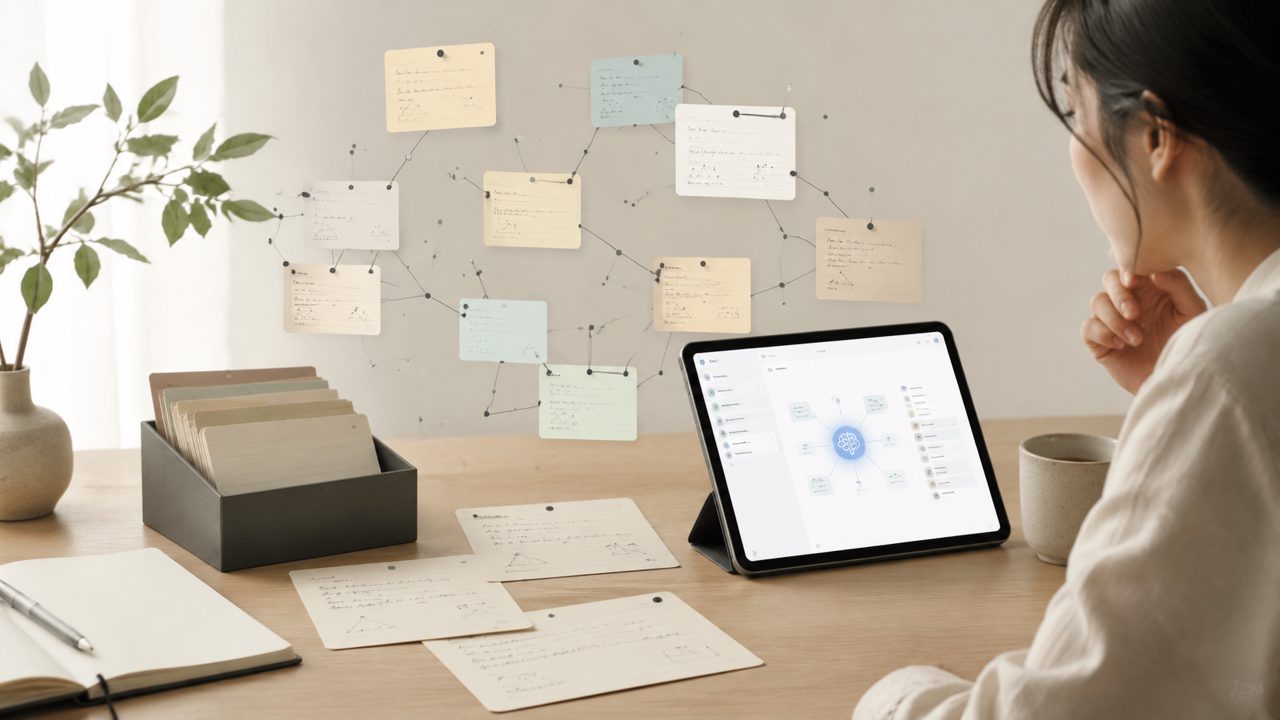
A few weeks ago I sat down to see how well digital note-taking tools actually support the Zettelkasten method. I’ve been practicing it on index cards for a while, but I wanted to find a setup that worked for classes and meetings without losing the core idea: atomic notes, links between ideas, and a growing web of knowledge. Here’s what I noticed – organized as a checklist that doubles as a practical roundup.
- Atomic notes are still the foundation. The Zettelkasten principle of one idea per note sounds simple, but most apps encourage dumping a wall of text. I tested a few that claim to break things down automatically. Tools like beanly and tidenote try to summarize long content into separate notes, but the splits aren’t always logical. You still need to review and rearrange. That’s a realistic tradeoff: automation saves time, but you lose the mental friction that makes the original method stick.
- Linking requires deliberate effort. Zettelkasten works because you connect notes. Some apps offer backlinks, but I found that auto‑generated links are often too broad. For example, Anchor Text in one app I tried just matched keywords instead of concepts. Notes labeled “connection” often contained unrelated snippets. The best setup I found was using a dedicated journal field to write a short reason for each link. That forced me to think, which is the whole point.
- AI summaries can be useful, but they flatten nuance. I tested a feature that condenses a meeting transcript into three bullet points. It worked well for surface‑level facts (dates, action items), but it missed the subtle disagreements or half‑formed ideas that make a Zettelkasten valuable later. For classes, it handled textbook chapters decently, but for qualitative research, I ended up rewriting most of the “summaries” myself. If you rely on AI note taking apps for Zettelkasten, expect to edit heavily.
- Search is better than browsing in digital setups. With physical cards, you stumble across old notes by flipping – that’s part of the magic. Digital Zettelkasten, especially with apps like 小片刻, relies on full‑text search. It’s faster, but you lose serendipity. I tried turning off search and just reading through the graph view once a week. That helped, but it still felt more curated than chaotic. Not necessarily bad, but different.
- The best free AI note taking app 2026 won’t be a silver bullet. I looked at a few candidates for the title – including tidenote and beanly. They tick the boxes: voice input, summary generation, cross‑device sync. But none of them force you to write notes in a Zettelkasten style. The method only works if you commit to atomicity and linking. The app can’t do that for you. That said, if you pair a good free AI note taking app with a bit of discipline, it beats index cards for speed and portability.
- One real limitation: AI can’t know what’s important to you yet. I imported a set of research articles into tidenote. The app extracted key terms and created note cards automatically. But it flagged every mention of a concept equally. In Zettelkasten, Journal entries would capture my personal reaction – the contradictory or unexpected observation. The AI didn’t know what surprised me. So I ended up treating the auto‑cards as raw material and writing manual notes on top. That dual process works, but it’s slower than pure manual note‑taking.
If you’re considering a digital Zettelkasten, don’t look for the tool that automates everything. Look for one that lets you fail quickly – that doesn’t lock you into a rigid structure, so you can adapt the method to your actual thinking rhythm. The apps I tested are getting there, but none feel finished. And honestly, maybe that’s okay. A little friction keeps the method honest.
Comments
Leave a Comment