You probably have a dozen photos from that weekend trip, maybe a voice memo or two, and a half-finished note on your phone that says “the coffee shop with the cat.” Weeks later, you scroll through the gallery and remember the cat, but the conversation, the smell of rain, the reason you laughed so hard — gone. That’s the real problem: not storage, not organization, but the gap between what happened and what you can recall.
TideNote doesn’t pretend to fix your entire memory system. It does one thing well — it turns your scattered bits of input into something you’d actually want to read later. You speak, you type, you paste a messy paragraph from a lecture or a meeting, and within seconds you get a clean, coherent note. Not a robotic summary, but something that still sounds like you, if you were more disciplined about punctuation.
Three ways TideNote changed how I capture days
1. The “5-minute end-of-day” routine
I used to avoid journaling because it felt like homework. Now I just dump a few voice notes while brushing my teeth: “The client meeting went weird, Lisa said X, I felt awkward about Y.” TideNote turns that into a plain, structured entry. I add a photo later. It’s not literary, but it’s honest and searchable.
2. Class notes that don’t vanish
During a three-hour research seminar, I typed fragments — a quote, a question, a sketch of an argument. TideNote pulled it into a one-page digest. No hallucinated “key takeaways,” just a rearrangement of what I actually wrote. Saved me the Sunday panic of reconstructing the lecture from memory.
3. A running log of small joys
My partner and I keep a shared TideNote board for “things that made us laugh this month.” It’s mostly one-liners and inside jokes. The AI doesn’t try to beautify them — it just keeps them clean. Six months later, scrolling through it feels like flipping a Polaroid album.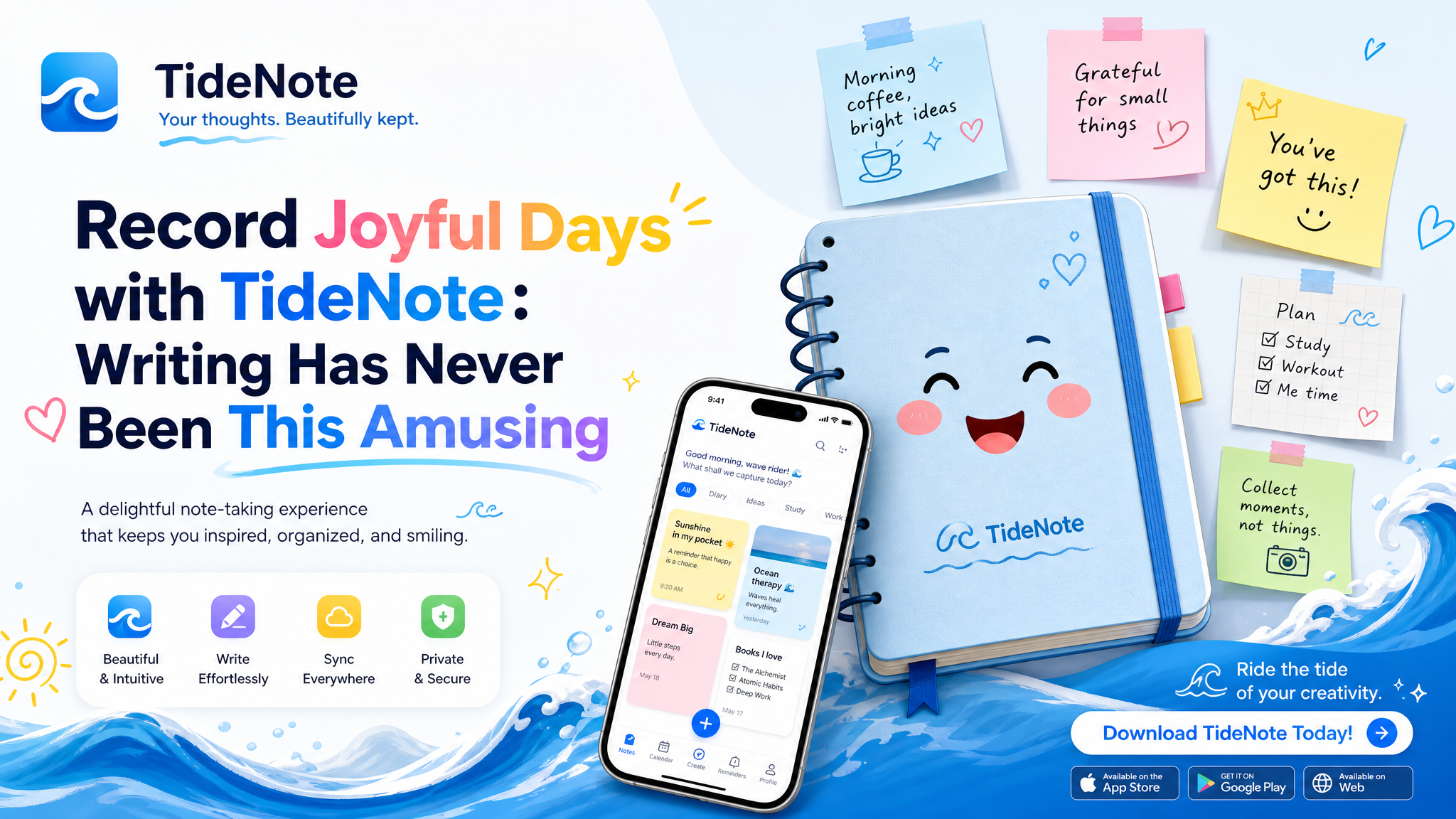
The tradeoffs you should know
TideNote is not the tool for deep, reflective writing. If you want to craft lyrical prose about your feelings, you’re better off with a blank document and a candle. The AI tends to flatten emotional nuance — it turns “I was furious but also a little relieved” into “I felt mixed emotions.” That’s fine for a log, frustrating for a personal essay.
Also, character recognition from handwriting is decent but not flawless. If your handwriting looks like a shaken seismograph, expect occasional gibberish. And the free tier limits the number of “smart notes” per day. For daily heavy users, the paid plan makes sense.
Who should use it
- Busy professionals who need meeting minutes without typing everything.
- Students who attend long lectures and want to review highlights later.
- Anyone trying to build a daily journal habit without the friction of formatting.
Who might be disappointed
- Writers looking for creative inspiration — the AI is too literal.
- People who want full offline functionality (some features require internet).
- Those who prefer zero AI intervention and total control over every comma.
TideNote won’t make writing amusing in the sense of a game or a joke. But it does make it light. And sometimes light is what gets you to capture the day before it slips away. Start with one voice note tonight. See if you remember tomorrow better than you did last week.
Comments
Leave a Comment