Most note-taking apps assume you already know what you want to write down. Beanly works differently — it's built for the moment when ideas are coming fast, a meeting is running long, or you're halfway through a lecture and already three points behind.
What Beanly AI Notes Actually Does
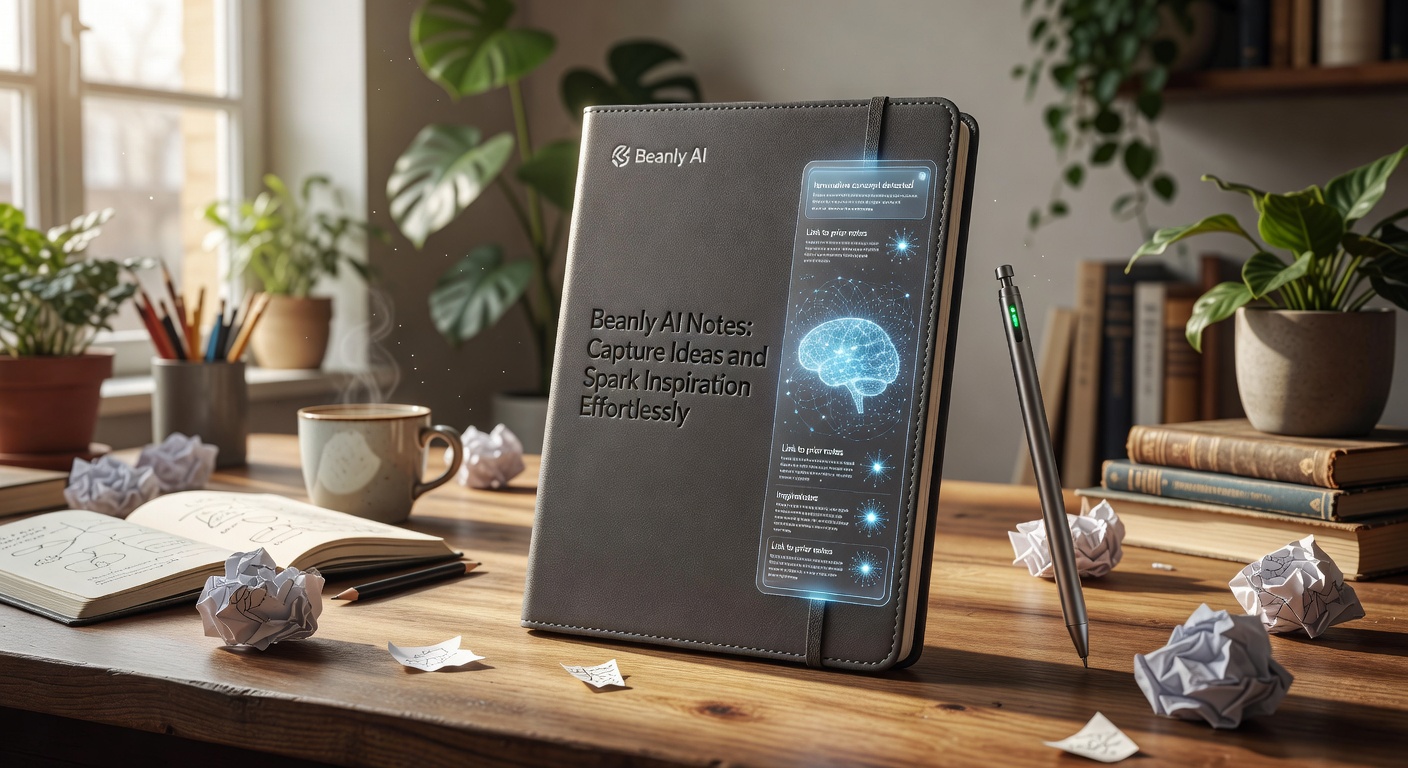
Beanly lets you capture raw input — voice, text, or long-form content — and uses AI to organize and summarize it without you having to do the cleanup manually. Paste in a transcript, drop in a wall of research notes, or record a meeting, and Beanly condenses it into something readable in seconds.
The core loop is simple: capture first, structure later. That's a meaningful shift if you've ever lost a good idea because you were too busy formatting your last one.
Where It Fits Into Real Work
In a client meeting, you're not going to stop and organize your notes mid-conversation. Beanly lets you dump everything in and get a clean summary after. Same goes for lectures — you follow along, capture loosely, and let the AI pull out the key points when you're done.
For research, it handles the problem of having too much source material. Feed it a long article or a set of notes and it surfaces what's actually relevant, rather than leaving you to re-read everything later.
It also works as a thinking tool. If you're working through a problem and your notes are scattered, Beanly can help you see the shape of what you've captured — which is sometimes more useful than a polished summary.
Tradeoffs Worth Knowing
AI summarization is only as good as the input. If your raw notes are fragmented or context-free, the output will reflect that. Beanly isn't going to infer meaning that isn't there — it organizes and condenses, it doesn't reconstruct.
It's also not a replacement for deep review. If you need to verify details or build on nuanced arguments, you'll still want to go back to the source. Beanly speeds up the first pass, not the final one.
If you already have a tight note-taking system you trust, the AI layer might feel like extra friction rather than help. It's most useful when your current process involves a lot of manual cleanup or you're regularly dealing with high-volume, fast-moving information.
Who Gets the Most Out of It
Beanly fits well if you're in back-to-back meetings, taking courses while working, or doing research that involves processing a lot of material quickly. The value compounds when you're capturing frequently — one summary is convenient, but a searchable, organized library of AI-processed notes is genuinely useful over time.
If your note-taking is already light and occasional, a simpler app probably covers your needs without the AI overhead.
The pitch for Beanly AI Notes isn't that it makes you more organized — it's that it removes the step where good ideas get lost because you didn't have time to deal with them properly in the moment.
Comments
Leave a Comment